A few years ago, a student looking for extra help with A Levels had two options: ask a teacher or find a tutor. Today the search results are crowded. There are exam-practice apps, tutoring marketplaces, video course libraries, revision websites and the learning systems schools themselves run. Many of them look equally convincing in an advert, and most of them are good at something. The trick is working out what you actually need.
This guide is written for students and for parents who are helping them choose. It explains the four main kinds of online learning option, gives you a practical checklist for judging any of them and shows how to test one before you commit. It fits into our wider guide on how to prepare for A Level exams, and it builds on our comparison of past papers vs AI exam practice, which explains how practice tools and official papers work together. For the school side, see how schools can use an LMS to support A Level students.
Platforms change their features and prices often, so this guide doesn't rank named products. It gives you the questions to ask, and you should check the current details on each provider's own website before you decide or pay.
The Four Kinds of Online Learning Option
The word "platform" covers very different things, and comparing them as if they were the same leads to disappointment. Start by naming the category you actually need.
| Kind | What it mainly does | Best for | Typical limits |
|---|---|---|---|
| Exam-practice tools | Question banks, past papers, marking and feedback | Practising and finding weak topics | Little or no live teaching |
| Tutoring platforms | Live lessons with a human tutor | Fixing specific problems, accountability | Cost, and quality varies by tutor |
| Online course providers | Recorded lessons and structured courses | Learning a subject from scratch or filling gaps in content | Less practice and personal feedback |
| School learning management systems | Classes, assignments, grades and communication for a whole school | Schools managing teaching and records | Not designed for individual exam practice |
Most students end up needing a mix, and that's fine. What goes wrong is paying for one kind and expecting the benefits of another, such as buying a course library and hoping it will provide personal feedback.
Exam-practice tools
These focus on questions. A good one lets you practise by topic, sit past papers and get feedback on your answers. They are strong for volume and for spotting weaknesses, and they are usually cheaper than a human tutor. Their limitation is teaching: they can explain, but they rarely replace a teacher who knows you.
Tutoring platforms
These connect you with a person. A tutor can diagnose why you're stuck, adapt in real time and hold you to a routine. That personal judgement is the thing no tool fully matches, and it is also why tutoring costs more. The quality depends heavily on the individual tutor, so ask about experience with your specific exam board and subject.
Online course providers
These offer structured courses, often with recorded lessons. They suit students who need to learn content in an organised way, for example when they are self-studying or catching up. Check how closely the course follows your syllabus and how much practice it includes, since watching a lesson is not the same as being able to answer an exam question.
School learning management systems
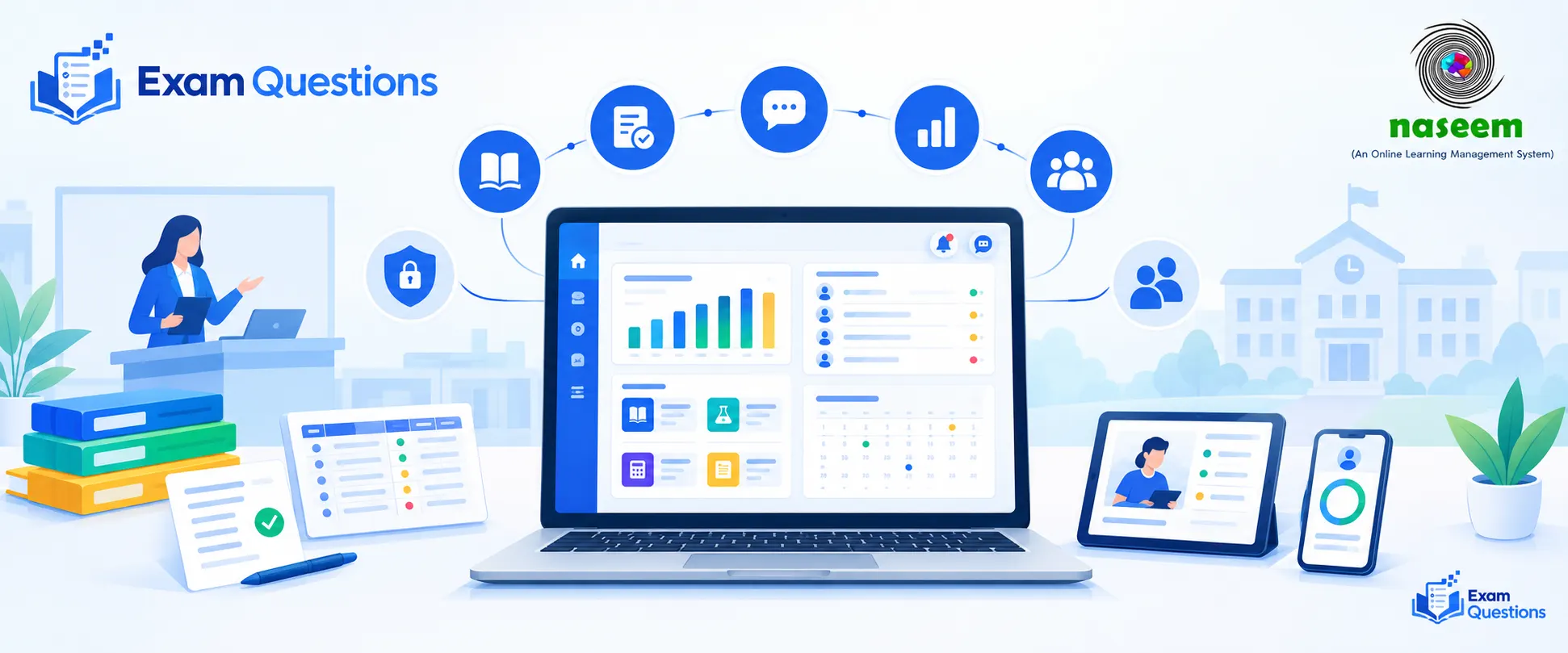
A learning management system, or LMS, is the software a school uses to run its teaching online: setting work, collecting it, recording grades and keeping teachers, students and parents in contact. It is a tool for the institution, not usually something an individual student chooses. Schools that want one system across all their classes look at platforms built for that purpose, such as Naseem Education. Our guide on how schools can use an LMS to support A Level students explains what a school LMS can do.
A Practical Evaluation Checklist
Whatever kind you're considering, run it through the same ten questions. You don't need a perfect score on all of them, but you should know where the gaps are before you pay.
| Criterion | What to look for | A warning sign |
|---|---|---|
| Syllabus alignment | Content tied to your exam board and syllabus code | Generic "A Level" content with no syllabus references |
| Subject availability | Your exact subjects, and the papers you sit | Only popular subjects, or vague coverage |
| Authentic past papers | Real papers with official mark schemes, clearly labelled | Unlabelled questions presented as "exam questions" |
| Generated practice | Clearly marked as practice, not official or predicted | Claims of predicting the exam |
| Marking and feedback | Clear reasoning, and honesty about how marking works | A score with no explanation |
| Explanations | Plain-language help that matches your syllabus terms | Fluent answers that use different terminology |
| Usability | Fast, clear and works on your device | Confusing navigation, constant interruptions |
| Accessibility | Readable text, sensible contrast, works on a phone | Tiny text, desktop-only design |
| Privacy and safety | A clear privacy policy, minimal data collected | Vague policy, unnecessary personal data |
| Price | Clear cost, a trial or free tier, easy cancellation | Hidden fees, hard-to-cancel subscriptions |
Two of these deserve extra attention. Authentic past papers should come from the exam board, and for Cambridge International A Levels they are published on the board's official website, Cambridge International. If a platform's papers don't match what you find there, ask why. And any claim to predict exam questions should make you cautious, because no tool can know what an exam board will ask.
How to Test a Platform in an Hour
- 1
Pick one weak topic. Choose something real from your own syllabus, not a demo topic.
- 2
Check the content against the syllabus. Does it cover what your course covers, in the terms your course uses?
- 3
Attempt a short set of questions. Do them without help, as you would in practice.
- 4
Read the feedback critically. Is the reasoning clear? Does it agree with your textbook and a mark scheme?
- 5
Try the awkward bits. Look at the privacy policy, the price and how to cancel.
- 6
Decide after, not during. Give it a day, then ask whether you learned something you'd have missed otherwise.
An hour on a real topic tells you more than any list of features, and it protects you from paying for something that only looks impressive.
Comparing the Options by Category
| Aspect | Exam-practice tools | Tutoring platforms | Course providers | School LMS |
|---|---|---|---|---|
| Real teaching | Limited | Strong | Moderate (recorded) | Depends on the school |
| Volume of practice | High | Moderate | Varies | Set by teachers |
| Personal diagnosis | Limited | Strong | Limited | Teacher-led |
| Past papers | Often included | Used by the tutor | Sometimes | Shared by teachers |
| Cost pattern | Often lower, check plans | Usually highest | Varies | Paid by the school |
| Who chooses it | Student or parent | Student or parent | Student or parent | The school |
These are general patterns, not facts about any particular product. Individual providers differ a great deal, so treat the table as a way to think about categories and verify the specifics yourself.
A Note for Parents
If you're helping choose, four questions are worth asking beyond the features. What data does the platform collect from your child, and is that explained clearly in its privacy policy? How is payment handled, and how easy is it to stop? Does the platform make it easy to see what your child has actually practised? And is there a free trial or free tier, so your child can judge it before you spend anything?
It also helps to talk with your child's teachers. They know what your child needs, and they can tell you whether a tool's approach matches the school's. A good platform supports the school's teaching and doesn't compete with it.
Where Exam Questions Fits, and Where It Doesn't
Exam Questions is an exam-practice tool built around Cambridge International A Level subjects. As described on our AI exam preparation page, you can pick a subject and topic, generate additional exam-style questions, attempt them, check your answer and ask for an explanation. It also lists real past papers by subject on the past papers pages, and you can try questions on the A Level practice and A Level questions pages. Our A Level subjects page shows which subjects it supports.
It suits students who want A Level-focused practice and feedback, who are working on specific weak topics and who like to practise in short sessions. It is less suitable in several situations. It is not a replacement for a teacher or tutor, so it won't diagnose you the way a person can. Its feedback is AI-generated, not official marking, so important answers should be checked against mark schemes. It covers a defined set of Cambridge subjects, so it won't help with other qualifications or subjects it doesn't list. And it is not a school learning management system.
Plans and features change over time, so check the site for what is currently available, including what is free and what isn't. Treat it as an optional resource that works best alongside your teachers and official papers. Our privacy policy explains how the platform handles data.
When You May Also Need a Tutor or a School System
- A tutor is worth considering when you've practised properly and are still stuck on the same problem, when you lose marks on technique and can't see why, or when you need accountability. Aim lessons at a specific problem and keep practising between sessions.
- A school learning management system is the school's decision, and it matters if you want assignments, grades and communication handled in one place across all subjects. If you're choosing a school or college, ask how it uses its systems and supports exam preparation.
- Neither may be necessary if a good teacher, official papers and a practice tool already cover what you need.
Common Mistakes When Choosing
- Paying before trying. Always test on a real topic from your own syllabus.
- Buying the wrong category. A course library won't give personal feedback, and a practice tool won't teach like a tutor.
- Trusting claims of prediction. No platform can know your exam questions.
- Ignoring privacy and cancellation. Read the policy and find out how to stop before you start.
- Choosing on price alone. A cheap tool you don't use, or one that misleads you, costs more in the end.
- Using only the platform. Official papers and your teachers remain the reference.
Final Thoughts
The best online learning platform for an A Level student is the one that does the job you actually need, matches your syllabus, is honest about what it can and can't do and that you will really use. Name the job, apply the checklist, test it on a real topic and check its claims against official material.
For the whole plan these choices belong to, read our guide on how to prepare for A Level exams, and for how practice tools compare with official papers, see past papers vs AI exam practice. Then browse our A Level subjects page and try one topic.
Practise the subjects you choose
Work through topic questions and past papers for your A Level subjects, and get your answers marked with the reasoning behind each mark.